
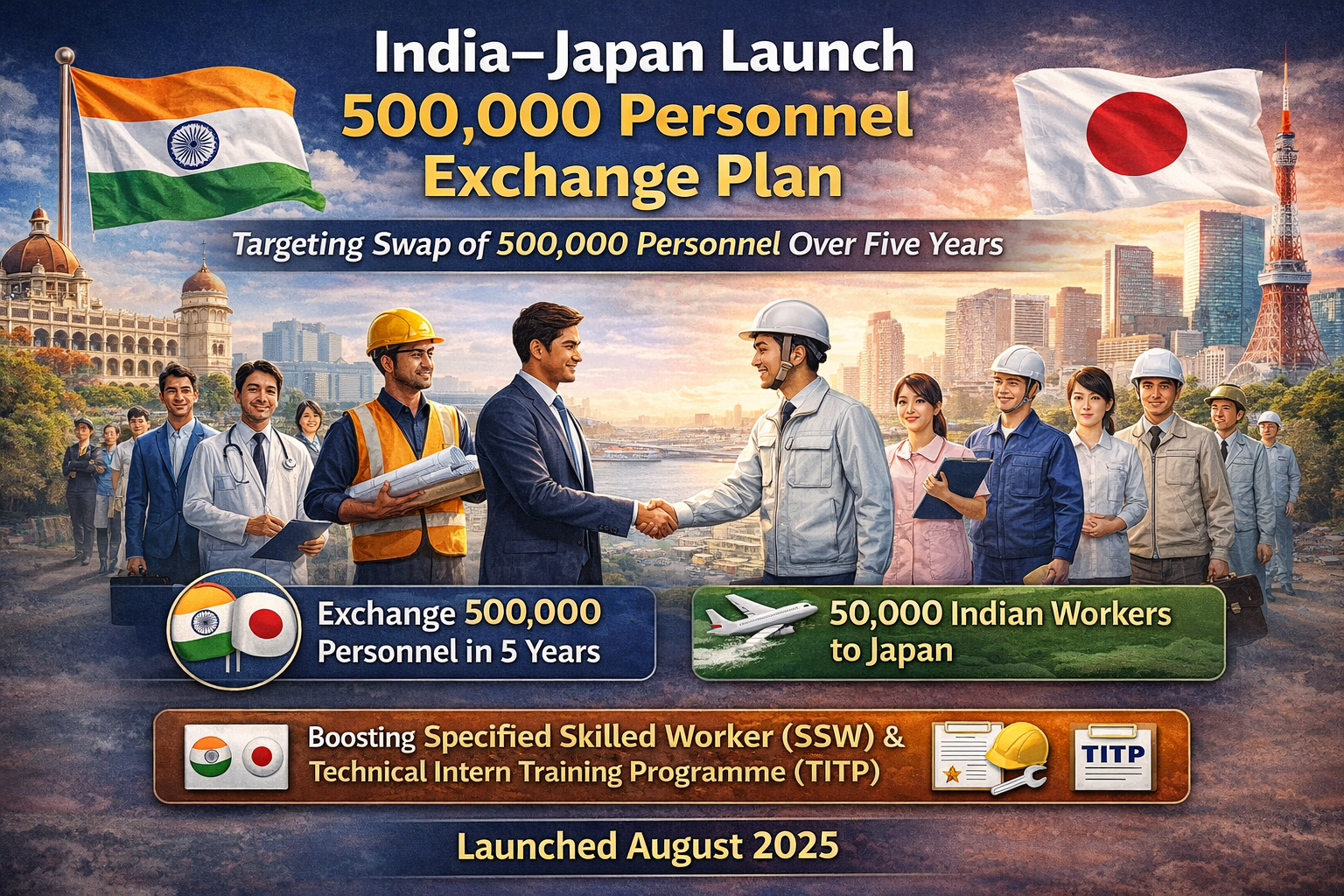

In a landmark move to deepen bilateral ties, India and Japan launched an ambitious action plan in August 2025 aimed at exchanging 500,000 personnel over five years.
At the heart of this initiative is a targeted effort to bring 50,000 skilled and semi-skilled Indian workers to Japan, addressing workforce shortages while creating global opportunities for Indian talent.
🌏 What Is the India–Japan Personnel Exchange Plan?
The initiative is part of the broader India–Japan strategic partnership, focusing on mobility, employment, and skill development.
Key Highlights:
- 🎯 500,000 personnel exchange target in 5 years
- 👷♂️ 50,000 Indian workers to Japan (initial focus)
- 🤝 Stronger workforce collaboration
- 📈 Boost to global employment opportunities
This is one of the largest people-to-people mobility programs between the two nations.
🧑🏭 Focus on Skilled & Semi-Skilled Workforce
Japan is currently facing a shrinking workforce and aging population, creating a high demand for foreign workers across sectors.
Key Sectors in Demand:
- 🏗️ Construction
- 🏭 Manufacturing
- 🏥 Healthcare & caregiving
- 🚜 Agriculture
- 🧹 Hospitality & services
Indian workers, known for their adaptability and technical skills, are expected to play a crucial role in filling these gaps.
📜 Understanding the Key Programs: SSW & TITP
The initiative will primarily operate through two major Japanese frameworks:
1. Specified Skilled Worker (SSW)
The Specified Skilled Worker (SSW) Program allows foreign workers with proven skills to work in Japan for longer durations.
Features:
- 🛂 Longer-term work visas
- 💼 Better wages and working conditions
- 📊 Opportunities across multiple industries
2. Technical Intern Training Programme (TITP)
The Technical Intern Training Programme (TITP) focuses on skill transfer and training.
Features:
- 🎓 Hands-on technical training
- 🌍 Exposure to global work standards
- 🔁 Skill transfer back to India
🚀 Why This Partnership Matters
This action plan is more than just a workforce exchange—it’s a strategic win-win for both countries.
For Japan:
- 👴 Addresses aging population challenges
- 🏭 Fills critical labor shortages
- 📉 Supports economic stability
For India:
- 💼 Creates international job opportunities
- 🌐 Enhances skill development
- 💰 Boosts remittances and economic growth
🎓 Skill Development & Language Training
To make this initiative successful, India is also focusing on:
- 🇯🇵 Japanese language training (JLPT certification)
- 🛠️ Skill enhancement programs
- 📚 Pre-departure orientation
This ensures Indian workers are job-ready and culturally prepared before moving to Japan.
⚠️ Challenges to Watch
While the initiative is promising, there are some challenges:
- 🗣️ Language barriers
- 🏠 Cultural adaptation
- ⚖️ Worker protection and rights
- 📋 Documentation and compliance
Addressing these effectively will be key to the program’s long-term success.
🔮 The Road Ahead
The India–Japan personnel exchange plan signals a new era of mobility-driven partnerships.
With structured programs, strong policy backing, and mutual economic benefits, this initiative could become a model for global workforce collaboration.
✍️ Final Thoughts
The 500,000 personnel exchange plan is not just about jobs—it’s about building bridges between two nations through people, skills, and shared growth.
For Indian professionals and workers, this opens doors to global careers, while for Japan, it ensures a sustainable workforce for the future.
Leave a Reply